


ProxHub - Match & Video Chat
4.79.00 Reviews
App Specs
- Version
- 1.1.2
- Updated On
- License
- Free
- Downloads
- 100,000+
- Developer
- MLBCAR LLC
- Categories
- Social
- Platform
- Android
Screenshots
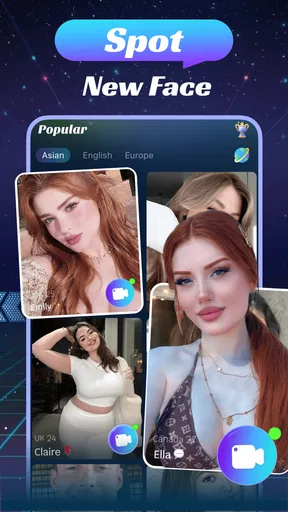



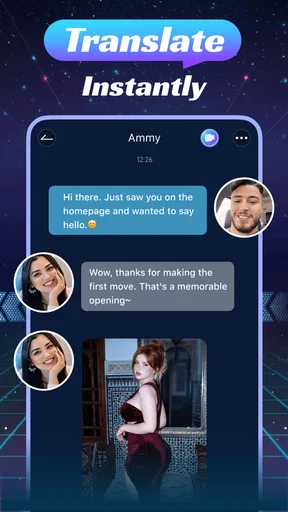
 Analysis by AppCompare
My first practical test for ProxHub - Match & Video Chat would be whether it fits a real gap in my day, rather than whether it feels exciting on the first night. It is a social app centered on meeting people and video conversation, so its appeal is more immediate than a feed built for endless browsing. That can be refreshing, but the value depends on whether you enjoy turning a spare moment into a live interaction—and whether those interactions remain worth your attention after the novelty wears off.
From a promising first week to a lasting habit
I’d use the first week to learn whether live, face-to-face conversation fits the moments when I actually want company, rather than treating early excitement as proof it belongs in my routine. Trying it in both a calm, private setting and a brief spare moment can reveal what feels comfortable—and that makes the longer-term question much clearer.
Why the first sessions can feel engaging
ProxHub is a free social app from MLBCAR LLC, and its focus is easy to understand: connect with people and chat by video. The basic idea is appealing if you are tired of social platforms where interaction gets buried under posts, reactions, and endless recommendations. Here, the reason to open the app is more immediate: see whether there is someone you would like to talk to.
That directness makes the first few sessions easy to fit into spare time. You might open it while waiting for a friend, during a break at home, or after moving to a new area where you do not yet know many people. A video conversation can feel more personal than exchanging short text messages, and it gives you a better sense of someone’s tone and energy. For people who enjoy spontaneous introductions, that is the strongest reason to try it.
I would approach the first week as a test of fit rather than a promise of instant connection. Social apps can feel lively when you are new, but initial curiosity is not the same as a sustainable routine. Ask yourself whether you leave a session feeling glad you opened the app, whether conversations have enough substance to be worthwhile, and whether you can use it without feeling pressured to stay longer than you intended.
One useful way to make that trial fair is to try it in more than one kind of moment. A relaxed evening at home and a rushed pause between errands are not equivalent settings for video chat. If it only feels comfortable when you have privacy and time, that is still useful to know: it means the app may work as an occasional activity, not as something to reach for whenever you have a spare minute.
What makes it useful beyond novelty
The practical value of a social app is not just how many people it can bring within reach. It is whether it helps you use your attention well. With video chat as part of the proposition, ProxHub is best suited to someone who is comfortable meeting people through conversation rather than silently browsing profiles or posts. If you prefer a more deliberate, text-first pace, an established messaging or community app may suit you better.
Worth Reading Before You Choose

Flipboard Shows What News Apps Must Do Beyond the Feed

Switching to Android Auto Means Rethinking Your Driving Routine

Google Calendar Makes a Crowded Week Easier to Manage

Ludo King Makes the Most of the Minutes Between Plans

Baby Panda World Brings Quick Play to Modern Phones, but Its Game Library Feels Busy

ESPN’s Live Game View Makes Following Close Games Easier
A useful everyday approach is to decide what you want from a session before opening the app. If you have ten minutes and want a light conversation, treat that as the whole plan; if you are hoping to form a more meaningful connection, give yourself room to talk without expecting that every attempt will lead somewhere. This small distinction helps keep casual socializing enjoyable rather than turning it into a search for a guaranteed outcome.
For example, imagine you have moved to a new city and are spending a Sunday evening alone. ProxHub could offer a low-commitment way to start meeting people from home, without having to arrange an in-person outing first. That is useful as a first step, but I would not treat an online conversation as a substitute for the slower work of building local friendships. The app can create an opening; what happens after that depends on the people involved and the boundaries you choose.
A different, more ordinary use might be a quiet evening when your usual group chat has gone silent and you feel like talking rather than scrolling. I would open the app only if I had enough privacy to speak and was genuinely open to a new conversation. That distinction matters: it turns the app into a deliberate social option, rather than a reflexive fix for every dull moment.
Month-to-month value depends on your social rhythm
After the first-week excitement settles, recurring value becomes a more personal question. Someone who enjoys short, spontaneous conversations may find a reason to return when they have downtime. Someone who only wants to talk to a small circle of existing friends may find that a general social discovery app has less to offer once the initial curiosity fades. Neither response means the app has failed; they reflect different social habits.
I would judge ProxHub over several ordinary weeks, not by one unusually good conversation. Notice whether opening it becomes a pleasant option or an automatic response to boredom. If you find yourself returning because you genuinely want to meet someone, that is a healthy sign. If you keep opening it without enjoying the sessions, novelty may be doing more work than lasting usefulness.
The app has an average rating of 4.8 from around 5.9K ratings and has passed 100K installs. Those figures suggest that many users have chosen to try it, but they cannot tell you whether its style will suit your own preferences. Social experiences are especially subjective: one person’s lively, casual atmosphere may feel unpredictable to another. I would give your own experience more weight than popularity when deciding whether to keep it.
Compared with a conventional social network, ProxHub’s video-chat emphasis points toward interaction rather than keeping up with a broad timeline. Compared with messaging apps, it is more relevant when you want to meet or speak with people beyond your established contacts. The trade-off is that a focused conversation app may not replace the everyday utility of a platform where your friends already share updates and coordinate plans. It makes most sense as a complement, not necessarily as the one social app you use for everything.
For a practical month-to-month check, I would think about what makes me return, not simply how often I open it. If I can name a clear reason—such as wanting a live conversation when my usual contacts are busy—that points to a useful role. If I cannot, I would avoid keeping it out of habit alone. A social app does not need to become part of a daily routine to be worthwhile; occasional use is a perfectly reasonable outcome.
Keeping the experience comfortable takes attention
Video conversations ask for more presence than reading posts or sending a message. You need to be in a place where you can speak comfortably, and you may not always be in the mood to appear on camera. I would keep that in mind when choosing when to open the app: a quiet moment with some privacy is a better fit than a crowded commute or a rushed break.
There is also a simple maintenance habit worth adopting with any social app built around meeting people: check your comfort level as you go. You do not owe a stranger a long conversation, personal details, or another chance if the interaction feels wrong. Keeping conversations at a pace you choose makes the experience easier to manage and helps prevent a casual app from becoming an obligation.
One small boundary I find useful is deciding in advance what I am comfortable sharing with someone I have just met. Keep early conversation to general topics, and do not let the momentum of a friendly exchange push you into disclosing identifying details before you are ready. This is not a special trick or an app feature; it is a simple way to stay in control when a live conversation can feel more personal than text.
Age suitability matters here too. ProxHub is rated Mature 17+, so it is not an app I would recommend for younger teens. Adults should still use their own judgement when speaking with people online, especially when deciding what identifying details to share or whether to take a conversation beyond the app. The age label is a useful boundary, not a replacement for common sense.
On the practical side, the current version is 1.1.2, and the stated minimum operating-system requirement is 7.0. If you are considering installing it on an older device, check that your phone meets that requirement before planning to use it. The app itself is free to download, while in-app purchases range from $0.99 to $99.99 per item. I would start with the free experience and decide whether anything paid is genuinely relevant to your use before spending money.
That free starting point makes it easier to judge the basic fit before deciding whether the app deserves more investment. I would not treat a purchase as a shortcut to better conversations: the main uncertainty is whether you enjoy this kind of social interaction in the first place. If you do consider an in-app purchase, pause to check what it offers and whether it addresses a need you actually have, rather than buying simply because you are still in the first-week excitement.
Where fatigue can creep in
The same spontaneity that makes video chat appealing can also become tiring. Not every session will lead to a natural conversation, and the effort of starting again can feel repetitive if you are looking for a dependable social circle. This is the key trade-off I see: direct interaction can feel more human than passive browsing, but it asks you to bring more energy and patience.
Another possible source of fatigue is opening a social app whenever you feel bored, then expecting it to supply a rewarding interaction on demand. I would avoid making that the default. Choose a few intentional moments to use it, and stop when you are no longer enjoying the exchange. If you prefer predictable conversations with people you already know, a group chat or a shared-interest community is likely to be a better everyday home base.
Some users may also find video-first socializing too exposed. If you would rather think through a message before sending it, or if you do not want to talk aloud in your surroundings, text-based options offer more control over pace and presentation. ProxHub is not the right choice simply because you want “more social media”; it is the more suitable choice when live conversation is the part you actually want.
There are only 9 written reviews alongside the larger rating count, so I would not treat the overall score as a detailed guide to every aspect of the experience. That is not a reason to dismiss the app; it is a reason to form your own view through modest, low-pressure use. Try it in a setting where you can leave easily, and pay attention to whether the conversations feel worth the time you spend.
For some people, the main friction will be timing rather than the app itself: a video conversation asks you to be available at the same moment as another person. If your free time tends to come in brief, unpredictable bursts, messaging may fit more naturally because you can reply when convenient. If you have a calmer window and prefer hearing someone’s voice and seeing their expressions, the live format may feel worth that extra coordination.
Who should keep it, and who should move on
I would recommend giving ProxHub a try if you are an adult who enjoys meeting people in real time, wants an alternative to passive feeds, and is comfortable with spontaneous video conversations. It may be particularly useful when you have a little free time and are open to a brief interaction without expecting every chat to become a friendship.
I would skip it if you want a carefully curated feed, a dependable way to keep up with close friends, or a highly structured community around a specific interest. It is also a poor fit if live video makes you uncomfortable or if the effort of starting conversations tends to drain you. In those cases, ordinary messaging, interest-based forums, or local groups may better match what you are trying to get from social apps.
If you are deciding between this and a familiar social network, ask whether you want discovery or continuity. A broad network is usually more convenient for following people you already know and keeping up with their updates. A niche community makes more sense when a particular hobby or topic is the reason you want to meet people. ProxHub is the more natural choice when you want the conversation itself to be the point, and you are comfortable with the unpredictability that comes with that.
A sensible long-term verdict
My lasting impression is that ProxHub - Match & Video Chat is most valuable as an optional doorway to conversation, not as a habit you need to maintain. It has a clear social purpose, a free starting point, and the potential to make an idle stretch of the day feel more connected. The experience is also dependent on your mood, your comfort with video, and the quality of the interactions you happen to find.
I would keep it installed only if it earns a place through use that feels worthwhile, rather than because a new app is exciting for a few days. Give it a fair try, set your own limits, and compare how you feel afterward with the time you spent. If it adds a few enjoyable conversations to your routine, that is enough. If it becomes another app you open automatically and close disappointed, there is no reason to force it into a lasting role.
Pros
- Combines profile matching with video chat in one app.
- Video calls can help users assess chemistry beyond profile photos.
- A straightforward format makes it easy to start exploring matches.
- Offers a social option for meeting people beyond text messaging.
- May suit users who prefer face-to-face conversation.
Cons
- Video chat can use significant mobile data.
- A stable internet connection is important for smooth calls.
- Matching results may depend on how many users are nearby.
- Sharing personal details with strangers requires caution.
- Some features or interactions may require in-app purchases.
FAQs for ProxHub - Match & Video Chat
What is ProxHub - Match & Video Chat?
ProxHub is a social discovery app designed to help people meet others through matching and video chat. Depending on the features available in your region and app version, you may be able to browse suggested profiles, express interest, and start a conversation when there is a match. Check the app listing for current features, age requirements, and any regional limitations before installing.
Is ProxHub free to use?
The app may be available to download at no cost, but that does not necessarily mean every feature is free. Matching, messaging, video calls, or access to additional profile options may be subject to in-app purchases, subscriptions, or usage limits. Review the store listing and the app’s payment details before subscribing, and check renewal terms so you know what you will be charged and how to cancel.
Is ProxHub safe for meeting and video chatting with strangers?
Video chat and matching involve interacting with people you may not know, so use sensible precautions. Avoid sharing your home address, financial details, passwords, or other sensitive information, and be cautious if someone asks for money or pressures you to move a conversation elsewhere. Review ProxHub’s reporting and blocking options, and end a conversation if it makes you uncomfortable. No matching app can guarantee that every user is genuine.
What permissions does ProxHub need, and can I control them?
A video-chat app may request access to your camera and microphone so you can make calls, while other permissions could support features such as notifications or profile photos. You can review permission requests on your device and deny access you do not want to grant; some features may then be unavailable. Check the app’s privacy information to understand what data it collects, how it is used, and whether it is shared.
How do I get started, and what should I check before downloading ProxHub?
First, confirm that ProxHub is available for your device and that you meet the app’s age requirements. Download it from the official Google Play or Apple App Store listing, then review the profile setup, community rules, privacy policy, and any subscription terms before using it. A clear profile can help with matching, but share only information you are comfortable making visible to other users.


